Refrigerator Repair
Is a Sub-Zero Worth the Money? What the Repair Math Says
A Sub-Zero is worth the money if you plan to keep it and repair it, because its common repairs cost a small share of a new built-in and the sealed system carries five years of full coverage. Here is what drives the bills and where repair stops making sense.
Words by
Dean Halvorsen
- Role
- Refrigeration technician — sealed systems and airflow
- In the trade
- 19 years
- Holds
- EPA 608 certified
A Sub-Zero is worth the money if you mean to keep it for the long haul and fix it when a part wears out. The machine is designed to be serviced one component at a time, and nearly every repair on the list below costs a small share of the $11,550–$21,190 a comparable built-in replacement typically runs. The value case only collapses when an owner treats it as a throwaway appliance. In the older homes of North Tacoma and the Proctor District, a built-in usually sits in a cabinet opening sized to it, often behind custom panels, so keeping the original unit running also spares the kitchen a round of carpentry.
What the purchase price actually buys
Any decent refrigerator keeps milk cold, so the premium is not really about cold air. What sets a Sub-Zero apart from a normal fridge is how it is meant to be kept. Many Sub-Zero built-ins cool the fresh-food and freezer compartments with separate systems. The dry freezer air and its odors stay away from the produce drawers, and a fault on one side seldom drags the other side down with it. That layout also explains a familiar complaint: when the fridge runs warm but the freezer is fine, a technician looks first at the fresh-food side’s own fan, defrost parts or sealed system rather than at the whole machine.
The other half of the value is serviceability. Fans, valves, sensors, gaskets and control boards are separate parts that can be changed individually. Every unit also carries a serial tag printed with its manufacture date, which helps you judge whether a repair is sensible and whether any warranty coverage is still running.
The warranty years carry much of the value
A large part of the money question is settled by the coverage that comes with a new unit. Sub-Zero’s residential warranty runs on three clocks, and all of them start on the date of original installation:
- Two years, full: parts and labor whenever a component turns out to be faulty in the way it was made or in the materials used.
- Five years, full, on the sealed system: parts and labor for a defective compressor, condenser, evaporator, drier and the tubing that links them, in normal household use.
- Twelve years, limited, on the sealed system: Sub-Zero still repairs or replaces those same sealed-system parts, but the owner pays every other cost, labor included.
Some things fall outside all three. Cosmetic flaws in the stainless work, whether on a door, a panel, a handle, a frame or the interior walls, are covered for only 60 days, and the filters and air cartridges you swap yourself fall outside the warranty entirely. Damage traced to an accident, neglect, or a careless installation or repair is excluded too. Any warranty claim asks for the model and serial number printed on the rating plate, plus the date the unit went in and who sold it, so registering the unit online the week it goes in saves a hunt through old paperwork later.
What actually drives a repair bill
Three things set the price of a Sub-Zero repair: the part itself, the time it takes to reach it, and the skill the job calls for. A built-in hides most of its working parts behind a grille, panels and trim, so a good share of the labor goes into getting at a fan motor or sensor before it is ever swapped. Some parts take more effort to source than others; door gaskets, for instance, are not sold online and come only through the manufacturer’s parts distributors. Anything that opens the refrigerant circuit is skilled work, because current Sub-Zero units use a flammable refrigerant and the manufacturer limits that work to technicians trained to handle it.
Here are the typical ranges for the common jobs, with a firm quote given once the fault has been diagnosed:
| Job | Typical cost |
|---|---|
| Compressor or sealed-system work | $1,440–$3,390 |
| Main control board | $390–$1,000 |
| Fan motor, evaporator side or condenser side | $310–$700 |
| Ice maker, fill valve or water line | $260–$780 |
| Defrost heater, defrost thermostat or a sensor | $270–$680 |
| New door gasket or seal | $290–$660 |
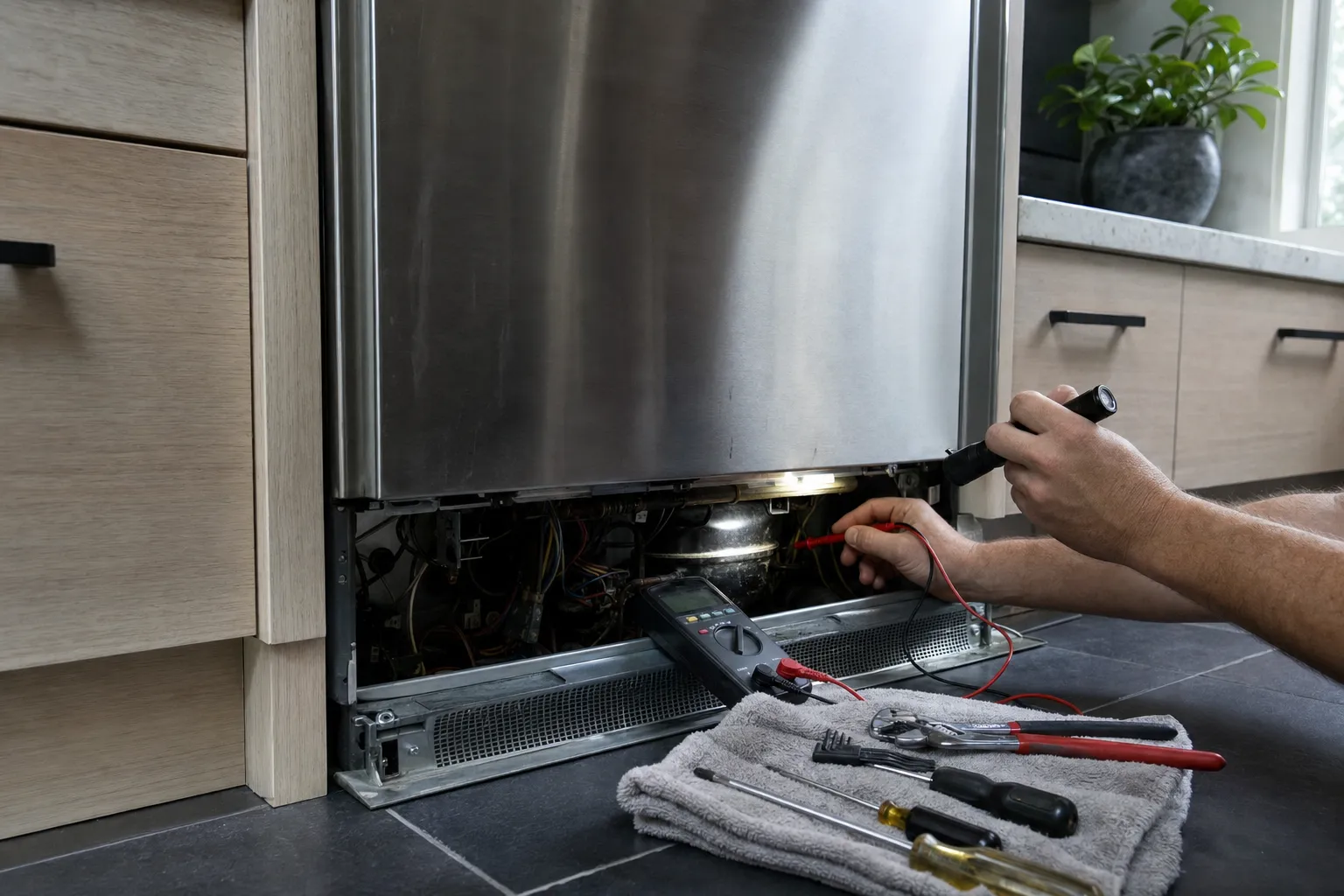
Every job starts with a diagnostic visit. That visit is $89; it buys the trip to your door plus a complete diagnosis, and the same $89 comes back off the bill when you say yes to the fix. If your question is narrower, such as an ice maker dripping into the bin or onto the floor, the short answer on what ice maker repair costs goes through that one line of the table in more depth.
Repair or replace: where the line falls
On the numbers alone, repair wins nearly every time. Even a sealed-system job at the top of its band is a fraction of a new built-in, and a new unit still has to be fitted to the opening, paneled and leveled before it cools anything. The harder question is whether the cabinet you are fixing has years left in it, and that turns on age and condition rather than on price.
Start with the serial tag. Production of the 500 Series ran from 1987 through 2003, while the 600 Series was made between 1996 and 2009; a unit from either line is long past every warranty clock and has well over a decade of service behind it. The Legacy Classic (BI) models were made from 2008 to 2022, and the current Classic (CL) series went into production in 2022, so a CL bought new may still sit inside its five-year full sealed-system coverage.
Then look at the pattern of failures. One tired fan or a split gasket on an otherwise healthy unit is an easy yes. A unit that has needed a control board, then a defrost repair, and now a compressor in quick succession deserves a frank talk before more money goes in. A technician can tell you whether the insulation, the door hinges and the sealed system look sound, and that judgment is worth more than any rule of thumb.
Habits that protect the investment
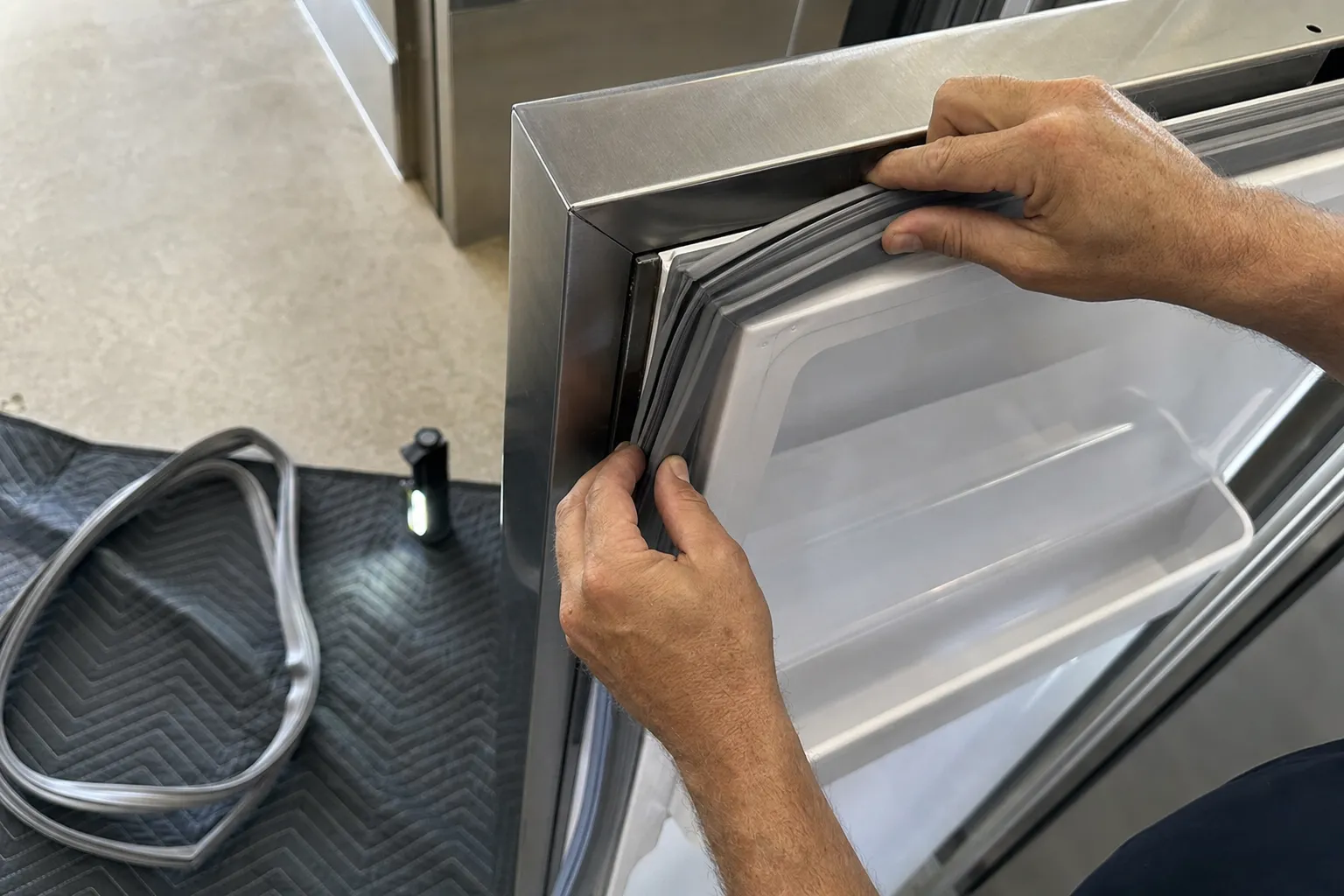
A Sub-Zero only pays back its price if it is looked after, and most of that care costs very little. Change the water filter on the schedule in your use and care guide; the twist-in 4204490, interchangeable with 9030868, fits Classic (BI and CL), Designer (IT, IC, DEC and DET), 648PRO, PRO3650 and PRO4850 models. Keep the condenser grille and coil clear of dust and pet hair so the compressor is not pushed into long run times. Run a hand around the door gaskets every so often; if the rubber is split or cracked, the maker recommends a new one, fitted by a technician so the door still closes evenly.
Keep an eye on the floor as well. A slow drip from the supply line or the drain can soak into a wood subfloor long before anyone spots it. If you do find a puddle, the page on water under a Sub-Zero lists the usual sources and what to check first.
When a Sub-Zero is the wrong buy
It helps to be candid here. If you expect to sell the house within a couple of years, the long-life argument matters more to the next owner than to you. If your kitchen has no opening for a built-in, the cabinet work on top of the purchase price eats into the value. And if you would always rather replace than repair, a cheaper freestanding refrigerator will hold your groceries just as well. For everyone else, and especially owners who already have a built-in framed into the kitchen, the math points one way: keep it, maintain it, and fix what fails. To book a visit, call (206) 472-1140 or use the booking button on this page.
Common follow-ups
Is a Sub-Zero really better than a regular fridge for the money?
It is if you plan to hold on to it, since a Sub-Zero is built to be kept and repaired rather than swapped out. Many models cool the fresh-food and freezer sides with separate systems, the cabinet is designed to sit flush in the kitchen, and its parts are serviced one at a time. An ordinary fridge costs less up front but tends to be replaced when something major fails.
Is it worth repairing a Sub-Zero compressor?
On a unit that is otherwise in good shape, usually yes. Compressor or sealed-system repair typically runs $1,440–$3,390, against $11,550–$21,190 for a comparable built-in replacement. In the first five years after installation the full sealed-system warranty pays parts and labor; after that, up to twelve years, Sub-Zero still covers the sealed-system parts while you pay the labor.
Why does my Sub-Zero fridge stop cooling while the freezer still works?
On models with separate cooling for each compartment, the fresh-food side has its own fan, defrost parts and sealed system, so it can fail on its own. A stalled evaporator fan, a coil iced over by a defrost fault or a door that no longer seals are the usual suspects, and a diagnostic visit tells you which one it is.
What does a Sub-Zero diagnostic visit cost in Tacoma?
The visit is $89, and that pays for the trip and the complete diagnosis. If you then approve the repair, the $89 is taken off the repair price, so the visit is not charged twice. The firm quote comes after the diagnosis, before any work begins.
Do I need a technician to replace a Sub-Zero door gasket?
Sub-Zero recommends that a service technician fit door and drawer gaskets, and the gaskets are sold only through its parts distributors, not online. Replacing one typically falls in the $290–$660 range, depending on which door it is and how the seal is mounted.